Donkey Assisted Learning and Coaching
Personal and professional growth for individuals and organizations for bringing out the best you! Located in the Fort Collins, Loveland area of Colorado.
Donkey Assisted Learning & Coaching
Donkey Assisted Learning (DAL), also known as Donkey Facilitated Learning (DFL), is similar to Equine Assisted Learning (EAL), but we work with donkeys — not horses! Donkey advocates such as the Donkey Sanctuary in the UK, have given Donkey Assisted Learning its own name due to most people thinking of horses when they think of “equine” based activities.
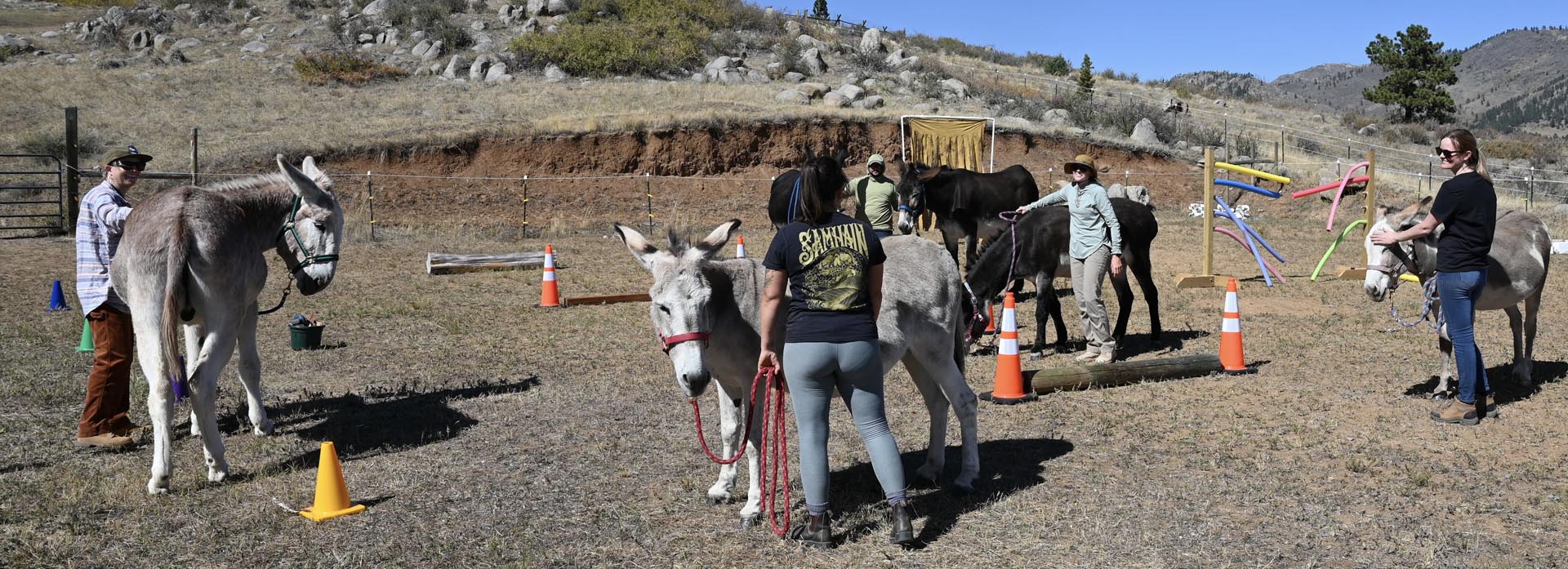
Donkey Assisted Learning and Coaching is an experiential approach where donkeys serve as co-facilitators to help participants develop life, professional and organizational skills and improve well-being. Research indicates that interacting with donkeys can lead to significant improvements in your life, work and relationships.
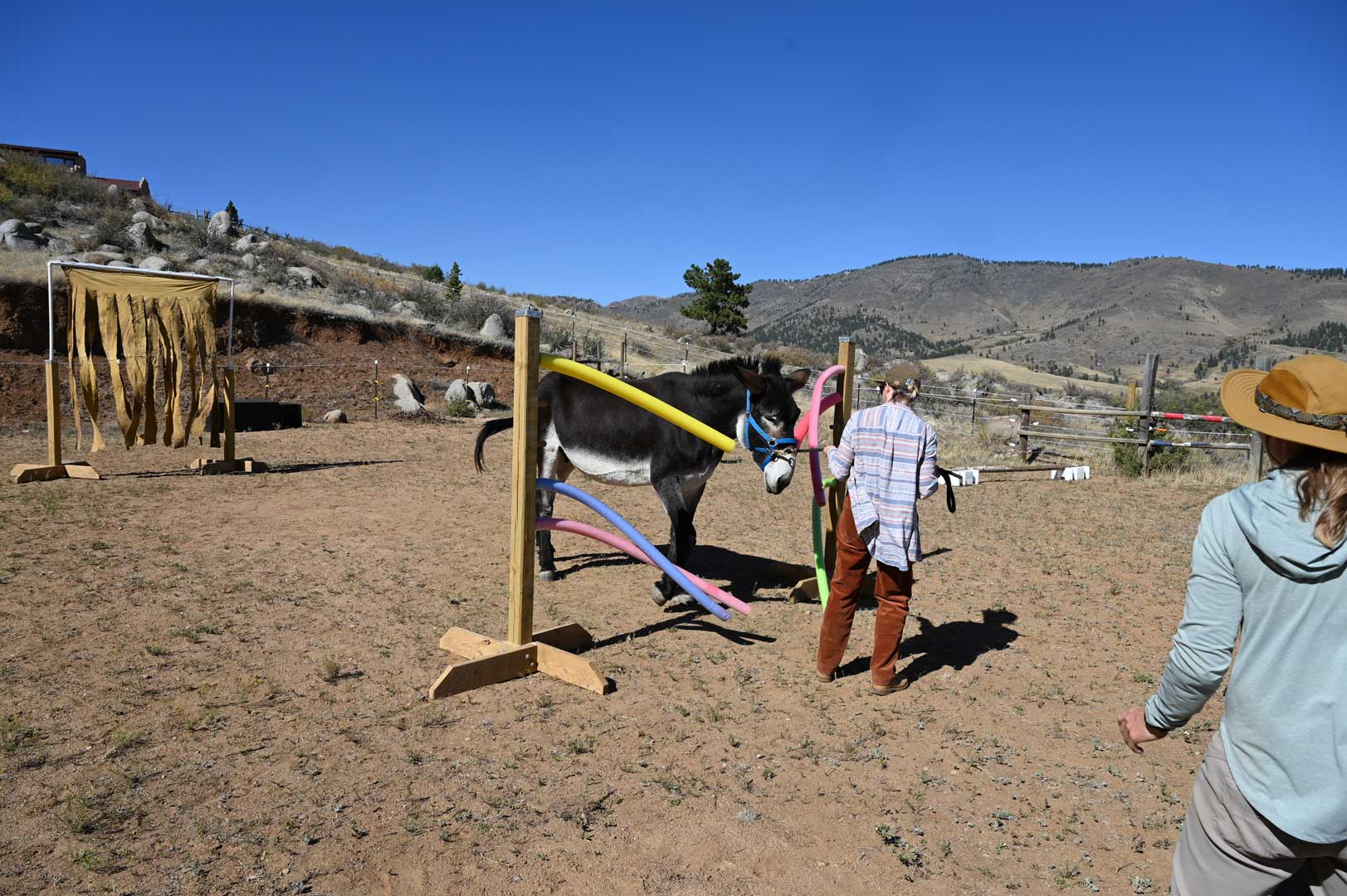
Examples of what you might do in sessions
- Engage in ground skills such as grooming, bonding and handling a donkey
- Lead and partner with a donkey through obstacles to develop leadership, problem-solving and trust
- Ride a mammoth donkey
- Hike or run with a donkey
- Use mindfulness: Quiet observation and "simply being" with the herd to promote grounding
What You'll Learn
Communication Skills
Ask for what you need and learn how to listen to others.
Emotional Regulation
Manage emotions that often prevent you from being grounded and present.
Self-Esteem, Confidence & Leadership
Build confidence, authenticity and trust yourself while learning to lead in positive relationship with others
Understanding of Relationships & Social Dynamics
Learn how to trust and establish authentic relationships, reduce tension at home and work, collaborate effectively and maintain healthy boundaries
Why Donkeys?
Donkeys are highly misunderstood and underrated equines that are often mislabel as “stubborn” or “stupid”, when in fact they are highly intelligent equines possessing the problem solving skills of dogs and dolphins! This misunderstanding about donkeys is rooted in a highly developed sense of self-preservation and intelligence — not disobedience or lack of intelligence.
Evolving from the desert terrain of northeastern Africa, donkeys have learned to partner with humans for the past 7,000 years. They were domesticated before horses and thus, have evolved to be solid, loyal and gentle companions to humans. Donkeys enjoy human companionship, actively seek it out, and like working with people — much like dogs do.
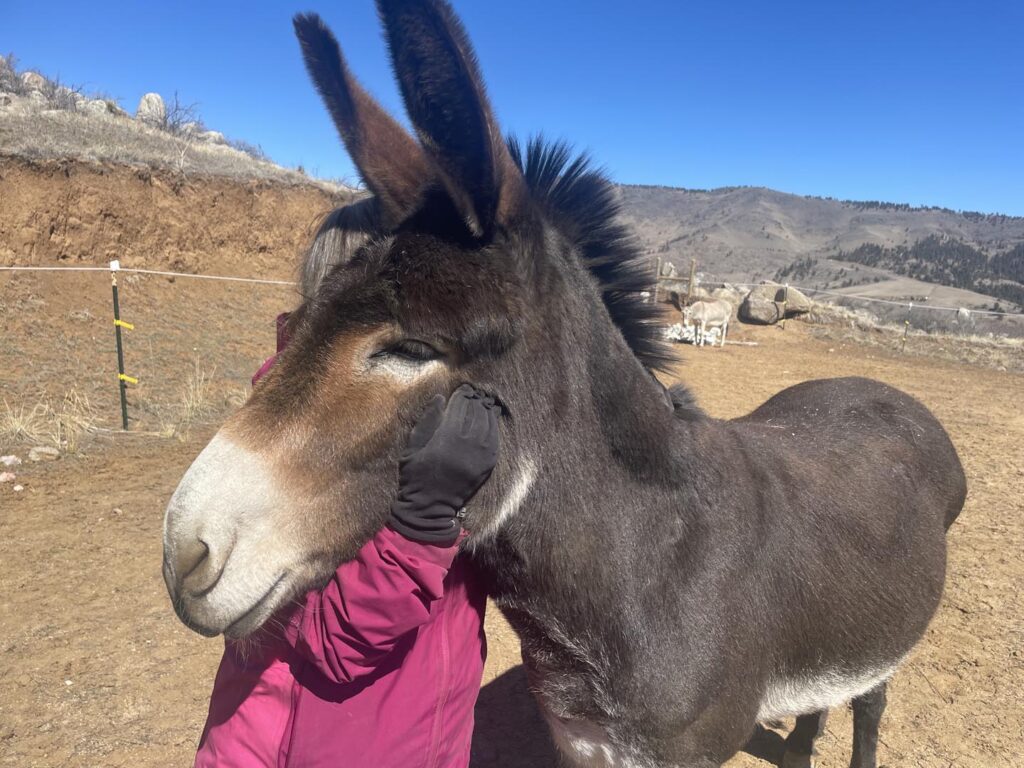
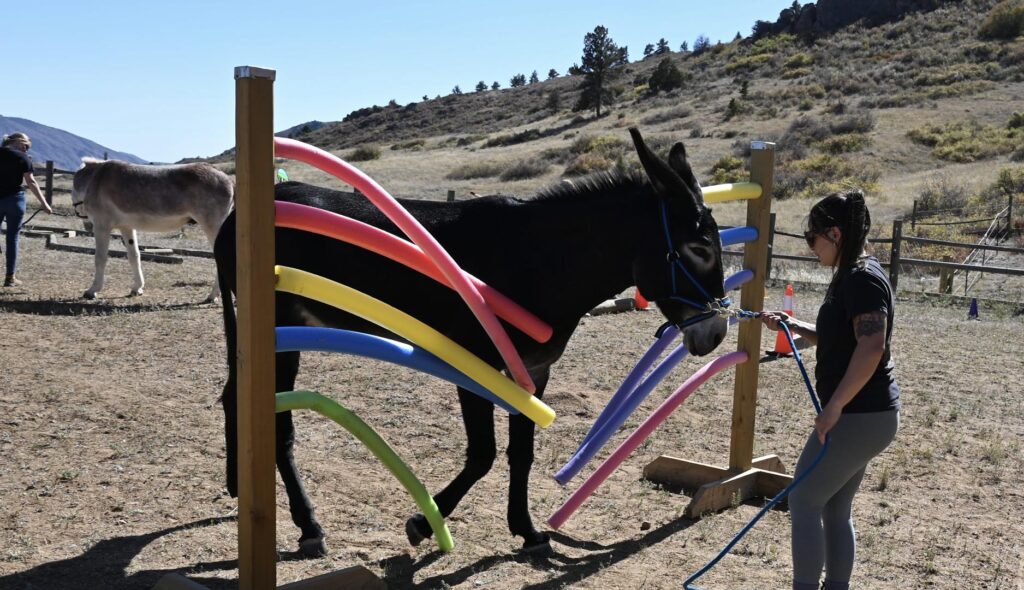
Donkeys are the perfect animals to assist us in learning about ourselves and our relationships for the following reasons:
- Patience and Calmness: Unlike horses, which are likely to flee when startled, donkeys typically "freeze" and assess situations, creating a safer, more predictable environment for humans to work with them. Their high intelligence, surefootedness, and desire to conserve energy means they are unlikely to hurt you, themselves and others around them.
- Thoughtful presence: Donkeys think before they act, this means when you work with them there is no guessing if they trust you or not — you will know! We believe donkeys are the most honest of all the equines. Their independent nature and thoughtful actions, will keep you honest with yourself and how you interact with others.
- Intelligence: Studies show donkeys can problem-solve at a rate similar to dolphins and dogs! Donkeys also have an exceptional memory. They are the “elephants” of the equine world.
- Non-Judgmental Presence: Donkeys don’t judge us; they just want us to be present and trustworthy. This gives us a great environment to work on your struggles and goals without worry of being judged.
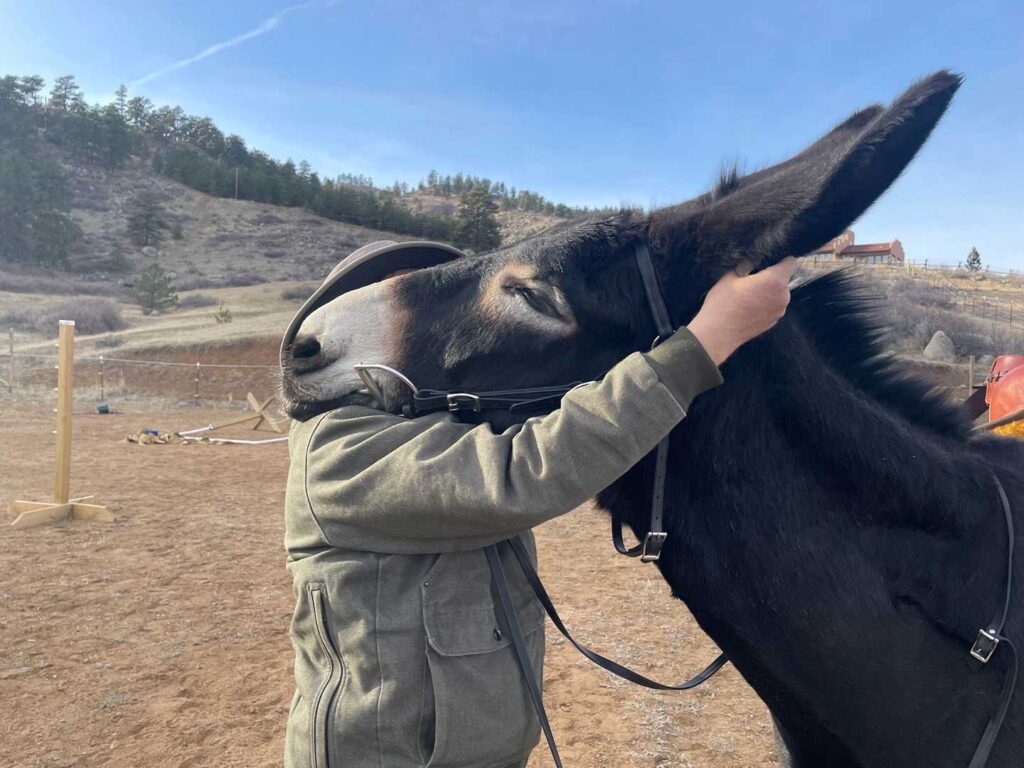
- Emotional Sensitivity: Donkeys are highly intuitive and empathetic; they can sense and mirror human emotions, often offering silent support to someone who is distressed.
- Affectionate Bonding: Once trust is established, donkeys are deeply loyal and affectionate, forming strong lifelong bonds with their companions and human caregivers.
- Strong Communication: They use a wide range of non-verbal cues—such as ear position, tail movement, and facial tension—to express complex emotions and needs. Learning how to communicate with donkeys helps us to learn how to better communicate as humans through building the skill of tracking subtle communication between each other.
Difference between coaching and therapy
Psychotherapy and Coaching intersect in many ways, with both working on helping someone achieve goals in their life, gaining understanding and building new ways of being. There are some differences between the two, however:
What is coaching?
- Coaching can be for life or personal, professional and organizational goals.
- Its purpose is to enhance your performance, learning, and/or fulfillment based on your goals and aspirations.
- Coaching utilizes personal strategic planning, values clarification, brainstorming, motivational counseling, and other counseling techniques.
- Coaching can be for individuals focusing on their personal or professional lives OR organizations wanting to build skills for their teams and employees.
- Coaching does NOT involve diagnosis, testing, assessment, or treatment of mental health disorders.
- Coaching is NOT covered by health insurance.
- Coaching is NOT regulated by state boards and requires less training and experience. Anyone could be a “coach”; therefore it is best to review the training and experience of someone you are seeking coaching sessions from. Please read more about Lindsay's training and experience in both coaching and psychotherapy.
- There are less power differentials in coaching than in the psychotherapy relationship. The coaching relationship is designed to be a relationship among equals – you provide the information about your goals, interests, and issues to be addressed and we work together to create a plan for achieving those goals and addressing the issues.
What is psychotherapy?
- Focuses on identifying, diagnosing and treating mental health issues within a professional relationship designed to help clients alleviate symptoms, understand motivations, and change behaviors that may interfere with effective emotional, social or intellectual functioning.
- Is regulated by state boards and a therapist is most often licensed or seeking licensure to be able to treat those with mental health issues (i.e., Licensed Marriage and Family Therapist, Licensed Clinical Social Worker, Licensed Professional Counselor, etc).
- Involves discussion of intimate personal information and may lead to feelings of vulnerability on the part of the client.
- Explores and processes deeper wounds and past experiences
- Can work with an individual, a family or a couple to support mental health struggles focusing on past, present and future struggles and goals.
- Someone often (but not always) has a mental health diagnosis.
If you are more interested in psychotherapy, please see more about Lindsay’s offerings for psychotherapy at holisticandintegrativetherapy.com.